
Here’s Looking at You!
©2025 by Cynthia Rutledge
When we use a mirror, we normally don’t think about how this amazing item came into being. The first mirrors were reflections, like in a clear, calm pool of water. The Egyptians used polished bronze shaped into flat discs, in representation of the Sun-God RA, dating as early as 2900BC.
As centuries past, man began to create somewhat clearer and more reflective glass mirrors using silver-mercury amalgams. Examples of such have been found in China dating as early as 500AD. But another thousand years would pass before silvery-mercury amalgam processes became more efficient, and less deadly, mercury being one of the most toxic elements on planet Earth.
By the 18th century, glass mirrors were the most prized possessions for an aristocratic lady’s toilette. As noted by a 17th century Countess de Fiesque: “I had a nasty piece of land that brought in nothing but wheat; I sold it and in return I bought this beautiful mirror. Did I not work wonders—some wheat for this beautiful mirror?”
The word mirror derives from the French word “mirour,” from the Latin “mirari”, to admire. The Romans, however, used the word “speculum,” from “specere”—to look, or behold.
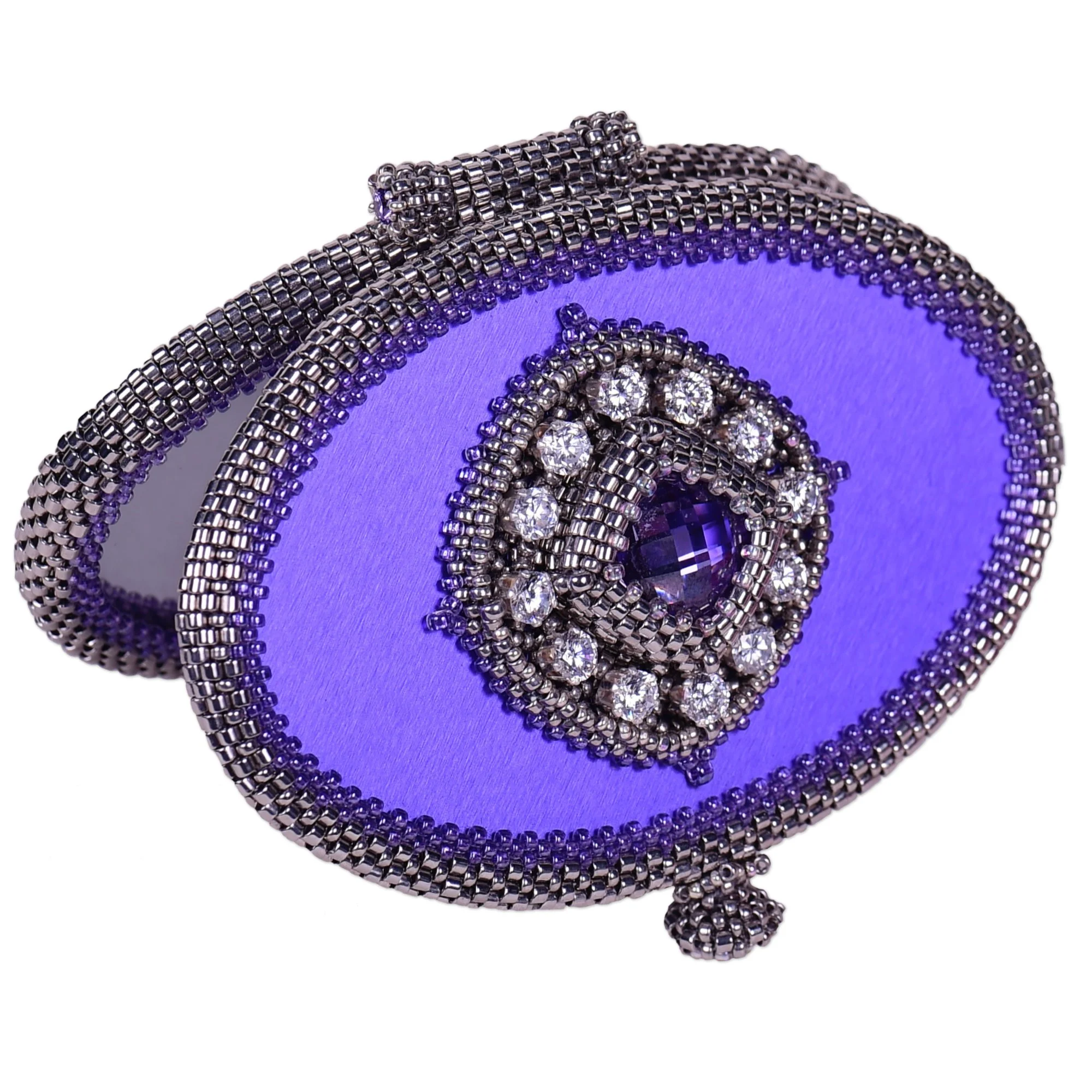
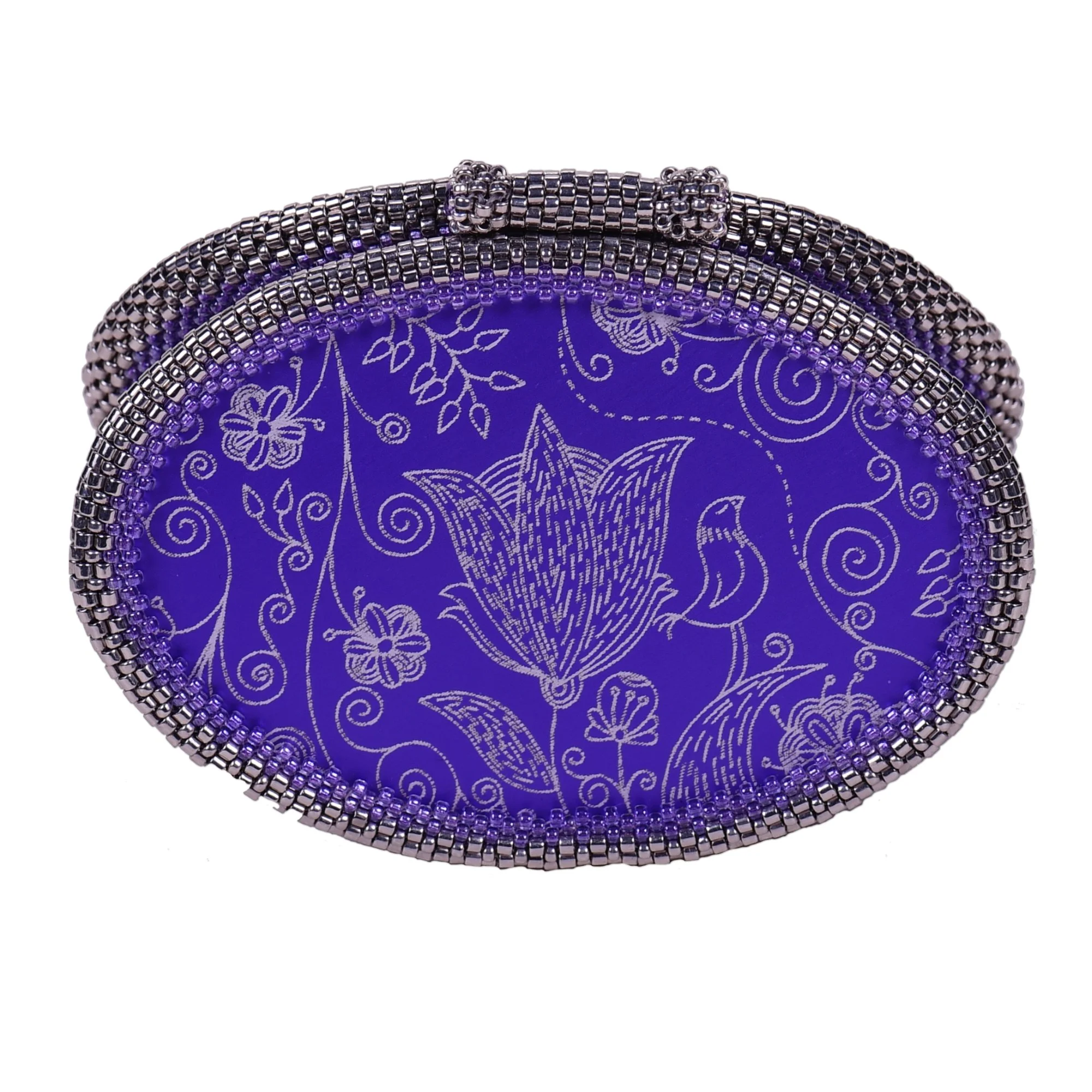
Here’s Looking at You! is a small, decorative compact. Colored aluminum metal is used for the front and colored, patterned, metal is used in the back of the compact. A central cushion cut CZ is bezeled and surrounded with set CZs for a striking focal point for the lid. The mirror is inside and is simply bezeled. A beaded hinge has set CZs on the ends and helps to control how far back the lid will fold. A bezeled CZ along the front edge of the lid is a faux closure. How lovely to use this beautiful piece to check your makeup or put on some lipstick. Here’s looking at you!
Skill level: Advanced
Workshop length: This is a 2-day workshop
Dimensions: 3-1/4” wide by 2-1/2” deep
Techniques:
Bezel work
Cutting 24-gauge metal
Peyote stitch, flat and tubular with increasing
Punching holes in metal
Setting CZs in fine metal settings
Stitching-in-the-ditch